
Blogs
Himalayan Pink Salt:
8 Reasons to Make the
Switch From Table Salt
Table of Contents
Toggle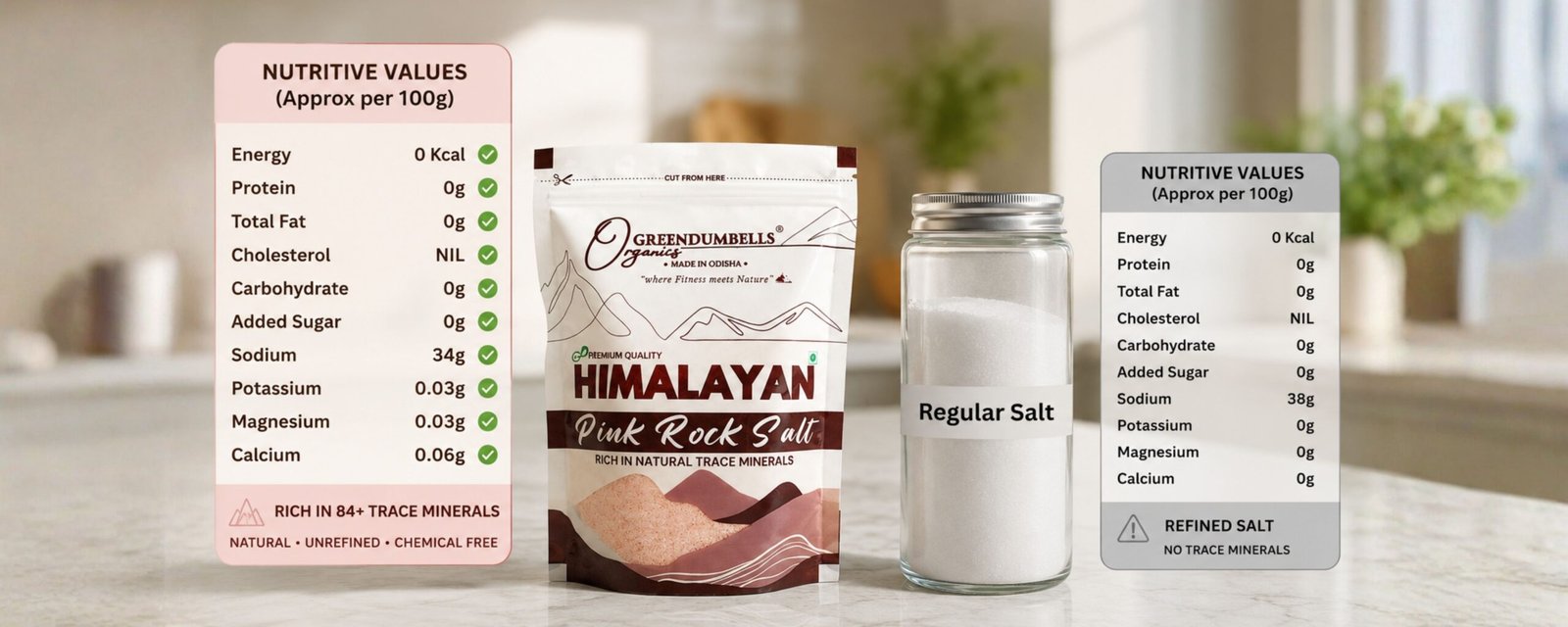
Himalayan pink rock salt, mined from the Khewra Salt Mine in Pakistan (the world’s second largest salt mine, formed 250 million years ago from ancient sea beds), is the unprocessed alternative. Here is what the science says about making the switch.
Reason 1: 84 Trace Minerals in Every Crystal
Himalayan pink salt’s distinctive colour comes from iron oxide and the presence of over 84 trace minerals including potassium, magnesium, calcium, sulfur, iron, zinc, selenium, and copper. These are present in small but real amounts. At typical daily salt consumption (4-6g), the mineral contribution is modest — but it is real and meaningful compared to table salt’s zero.
Reason 2: No Anti-Caking Agents or Chemical Additives
Standard table salt contains anti-caking agents — typically sodium aluminosilicate, calcium silicate, or magnesium carbonate. These prevent clumping and keep salt free-flowing. They are considered food-safe by regulatory standards, but they are chemical additives in something people consume every single day. Himalayan pink rock salt contains none of these — it clumps naturally when exposed to humidity, which is simply the crystalline nature of unrefined salt being honest about itself.
Reason 3: Lower Sodium Per Teaspoon Than Table Salt
Due to its larger, irregular crystal structure, Himalayan pink rock salt has slightly less sodium per teaspoon than fine table salt. The larger crystals mean fewer salt molecules per volume, resulting in roughly 15-20% less sodium per spoon compared to fine-grained table salt. This is a practical benefit for people trying to manage sodium intake — you get the same perceived saltiness with meaningfully less actual sodium.
Reason 4: Better for Blood Pressure Management
The combination of slightly lower sodium content and meaningful potassium — potassium counteracts sodium’s effect on blood pressure — gives Himalayan pink salt a marginal advantage for blood pressure management compared to pure sodium chloride table salt. This is not a dramatic effect, and people with hypertension should still monitor total sodium intake regardless of salt type. But at the margins, every gram of potassium consumed relative to sodium matters.
Reason 5: Supports Electrolyte Balance
The diverse mineral content of Himalayan pink salt — particularly magnesium, potassium, and calcium alongside sodium — supports more complete electrolyte replenishment than pure sodium chloride. Athletes, people in hot climates (which includes most of India for much of the year), and those with physically demanding work benefit from a more complete electrolyte profile. Traditional Indian practices of adding a pinch of salt and lemon to water for hydration were nutritionally wiser than they were given credit for.
Reason 6: Better Flavour Complexity
Chefs who have compared Himalayan pink salt to table salt consistently report that the unrefined salt has a more complex, rounded flavour — a slight mineral depth that enhances rather than simply salts food. This is not imagined: the trace minerals genuinely affect flavour perception. Using slightly less Himalayan pink salt than you would table salt is normal — the flavour is more present.
Reason 7: Supports Thyroid Health (With an Important Note)
Standard table salt is iodised specifically because iodine deficiency — causing goitre and thyroid disorders — was a significant public health problem in India before iodised salt became mandatory. Himalayan pink salt naturally contains trace amounts of iodine but not at the level of fortified table salt.
The important caveat: if you are switching entirely from iodised table salt to Himalayan pink salt, ensure you are getting iodine from other dietary sources — seafood, dairy, eggs, or an iodine supplement. This is particularly important in landlocked regions of India where dietary iodine from food is limited. You can also use a combination: Himalayan pink salt for most cooking, iodised salt for one or two dishes daily.
Reason 8: No Microplastic Contamination Concerns
A 2019 study published in Environmental Science and Technology found microplastic contamination in sea salt samples from 38 of 39 brands tested globally. Himalayan rock salt, mined from ancient salt deposits formed before modern plastic existed, contains no microplastics. As microplastic contamination of marine environments becomes increasingly serious, this distinction will become more significant over time.
The Honest Limit: What Himalayan Salt Cannot Do
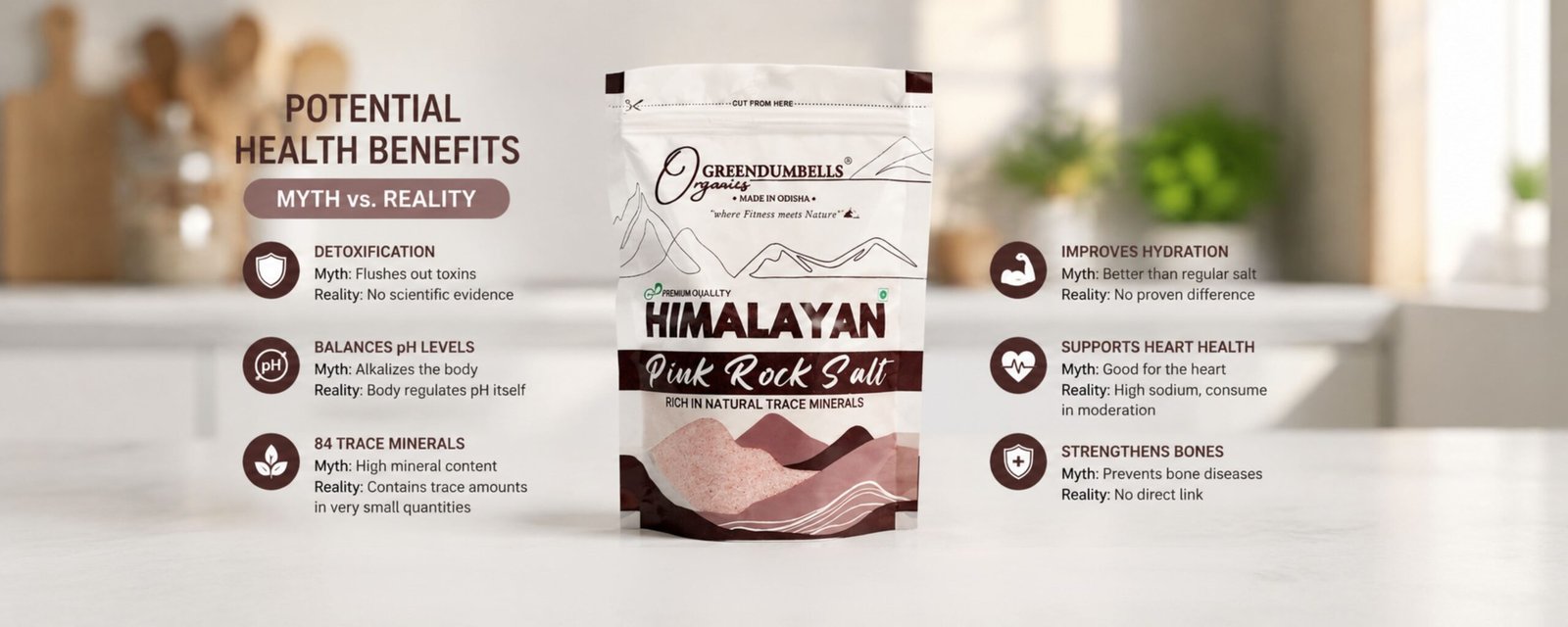
Some claims about Himalayan salt — that it creates negative ions to detoxify air, that it dramatically alkalises the body, that it has therapeutic effects on respiratory conditions through Himalayan salt lamps — are not supported by credible evidence. The nutritional and culinary benefits described above are real. The more exotic claims are marketing. The switch from table salt to Himalayan pink rock salt is worth making for the reasons above: fewer additives, more trace minerals, lower sodium per spoon, and better flavour. Make the switch for those reasons, and you will not be disappointed.