
Blogs
Cold Pressed Coconut Oil
for Hair:
Does It Actually Work?
Table of Contents
Toggle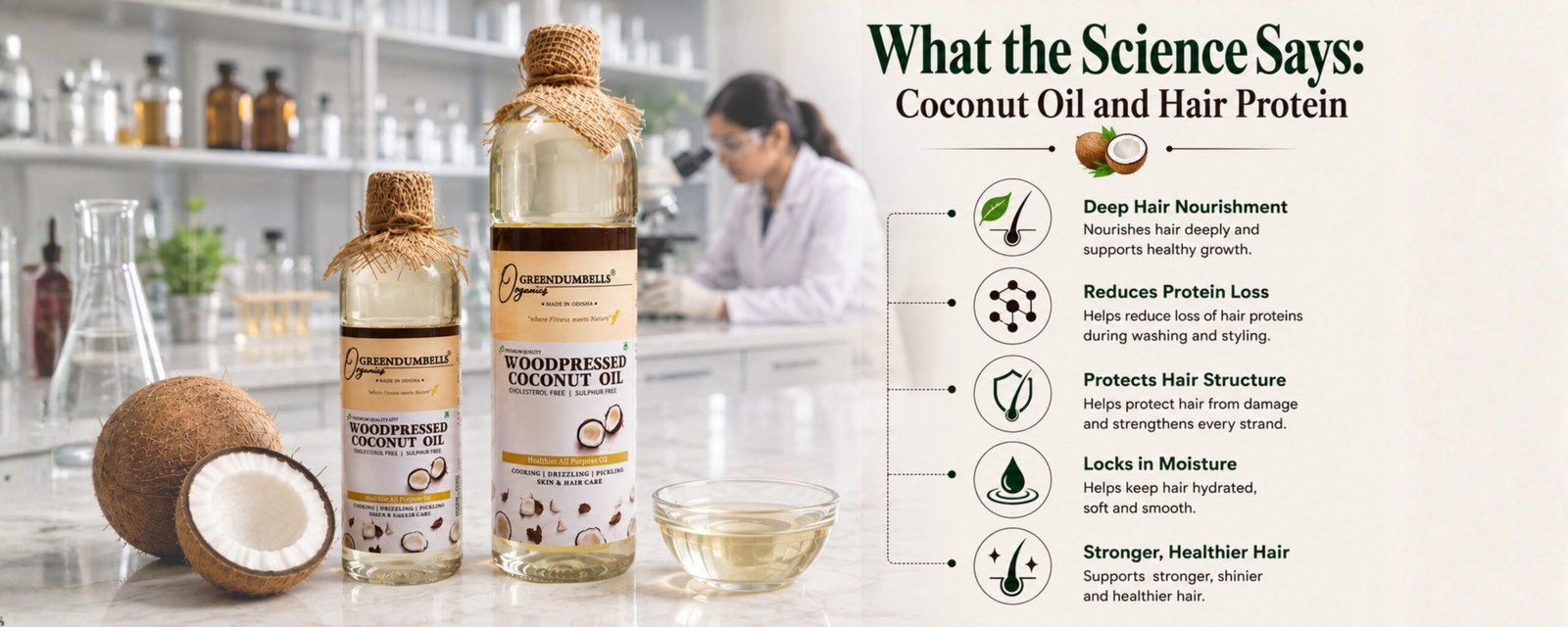
Let us separate fact from folklore.
What the Science Says: Coconut Oil and Hair Protein
The most significant piece of research on coconut oil and hair comes from a study published in the Journal of Cosmetic Science comparing mineral oil, sunflower oil, and coconut oil for their effect on hair protein loss. Coconut oil was the only oil that significantly reduced protein loss from hair, both before and after washing. The researchers attributed this to coconut oil’s unique molecular structure — its medium-chain fatty acids, particularly lauric acid, have a high affinity for hair proteins and low molecular weight, allowing them to penetrate the hair shaft rather than just coating the surface.
This penetration matters because it reduces the swelling and contraction cycles that hair undergoes when wet and dried, which is a primary cause of mechanical damage and breakage. Coconut oil essentially acts as a pre-wash protectant — applied before washing, it reduces the amount of water that enters the hair shaft, reducing the structural stress of the swelling process.
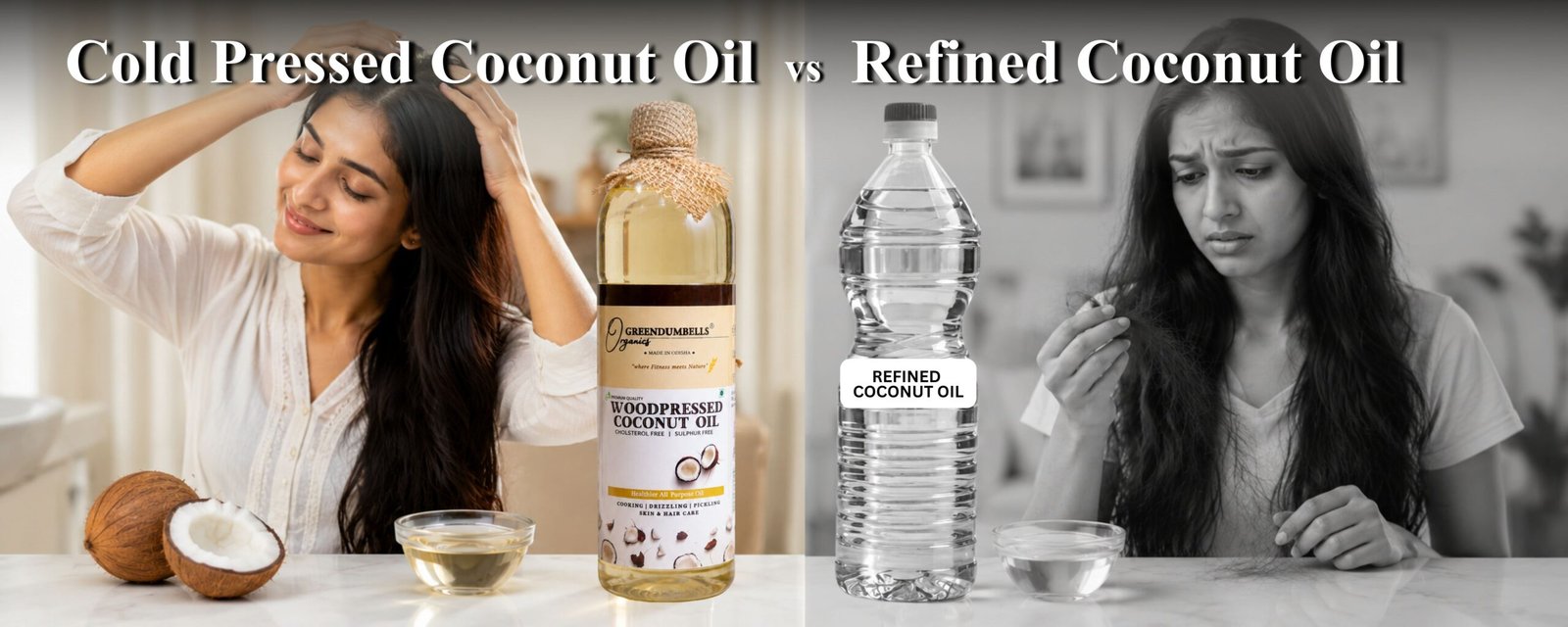
Cold Pressed vs Refined Coconut Oil for Hair: The Difference
Cold pressed coconut oil retains its full lauric acid content (approximately 49-52% of fatty acid profile), natural Vitamin E (tocopherols), and plant-based antioxidants. Refined coconut oil loses Vitamin E and antioxidants during processing but retains most of its lauric acid — the primary active compound for hair benefit.
For pure hair protein protection, both cold pressed and refined coconut oil work. The advantage of cold pressed for hair is the Vitamin E and antioxidant content, which provides scalp health benefits — reducing oxidative stress that can contribute to hair loss — that refined oil cannot offer. If you are using coconut oil purely as a hair mask on the shaft, refined is adequate. For scalp health and the full benefit, cold pressed is superior.
What Cold Pressed Coconut Oil Does for Hair (Evidence-Supported)
Reduces protein loss: documented in peer-reviewed research. Penetrates hair shaft: the molecular structure enables this, reducing mechanical damage.
Dandruff reduction: lauric acid has antifungal activity against Malassezia, the fungus primarily responsible for dandruff. A study in Skin Pharmacology and Physiology found coconut oil effective as an antifungal treatment comparable to mineral oil for scalp conditions.
Frizz reduction: the oil coats and smooths the hair cuticle, reducing frizz particularly in high-humidity environments. Split end prevention: while it cannot repair existing split ends, it reduces the mechanical stress that causes them. Scalp moisture: coconut oil creates a barrier against moisture loss in the scalp, beneficial for dry scalp conditions.
What Coconut Oil Cannot Do: The Honest Limits
Stimulate hair growth: there is no strong evidence that coconut oil applied topically significantly stimulates hair follicle activity or produces new hair growth beyond what normal scalp health supports. If you are experiencing hair loss, address the root cause — nutritional deficiencies, hormonal imbalances, stress — rather than relying on any topical oil as the solution.
Repair chemical damage: coconut oil can mitigate ongoing damage from heat styling and chemical treatments, but it cannot undo existing structural damage to chemically processed hair. It penetrates damaged hair less effectively than healthy hair.
Treat severe dandruff alone: for clinical-level seborrhoeic dermatitis, medical treatment is required. Coconut oil can complement but not replace dermatological care.
How to Use Cold Pressed Coconut Oil for Best Hair Results
As a pre-wash treatment: take 2-3 teaspoons, warm between palms, apply to hair shaft and scalp, massage gently for 5-10 minutes, leave for 30 minutes minimum (overnight is better), then shampoo out. Do this 2-3 times per week.
As a leave-in for frizz: take a very small amount — a pea-sized drop for fine hair, half a teaspoon for coarse or thick hair — warm between palms, and smooth through the lower half of damp hair. Too much causes greasiness.
As a scalp treatment for dandruff: mix cold pressed coconut oil with a few drops of tea tree oil (if no skin sensitivity), massage into scalp, leave for an hour, wash out. The combination of coconut oil’s lauric acid and tea tree oil’s additional antifungal properties is more effective than either alone.
Which Hair Types Benefit Most
High porosity hair — hair that has been chemically treated, heat damaged, or is naturally coarse — benefits most from coconut oil because the hair shaft has more openings for the oil to penetrate. Low porosity hair — typically fine, silky, straighter hair — may find coconut oil leaves buildup because it cannot fully penetrate the tightly closed cuticle. If you have fine, low-porosity hair and find coconut oil makes your hair feel heavy, use smaller amounts or use it only as a pre-wash rather than leave-in treatment.